Chapter 1
Notes + Exercise LinkCellular Organization
Explore cell as the basic unit of life, comparison between animal and plant cells, and the levels of organization (cell, tissue, organ, organ system, organism).
Get free access to chapter-wise solved exercises, conceptual MCQs, short and long questions, and PDF download links aligned with the latest National Book Foundation (NBF) textbook.
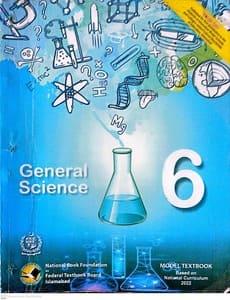
Looking for the latest Class 6 General Science notes for Federal Board (FBISE)? StudyPlusPlus provides comprehensive, SLO-based solved notes for the 2026-2027 session based on the National Book Foundation (NBF) textbook. Our guide covers all chapters with solved textbook exercises, conceptual MCQs, short-answer questions, and detailed long-answer questions to help middle school students prepare effectively for board exams.
Select any chapter to read online or download the PDF notes for exam preparation.
Explore cell as the basic unit of life, comparison between animal and plant cells, and the levels of organization (cell, tissue, organ, organ system, organism).
Learn about sexual and asexual reproduction, natural vegetative propagation, artificial propagation techniques, and the benefits of vegetative propagation in plants.
Understand nutrients in food (carbohydrates, proteins, fats, minerals, vitamins, water), balanced diets, and the relationship between diet and fitness.
Study the process of digestion, the structure and functions of the human digestive system, and common digestive disorders like constipation and diarrhea.
Examine states of matter, particle theory of solids, liquids, and gases, diffusion, and phase changes (melting, evaporation, sublimation, condensation).
Explore elements and compounds, differences between atoms, molecules, elements, and compounds, and properties of table salt (NaCl), water, and sugar.
Differentiate between pure substances, elements, compounds, and mixtures. Learn about alloys, everyday applications, solution formation, and separation techniques.
Study kinetic and potential energy, energy conversions, types of energy, law of conservation of energy, and renewable vs non-renewable energy sources.
Discover static electricity, types of electric charges, electric current, circuit symbols, open vs closed circuits, and series vs parallel circuits.
Explore magnetic fields (including Earth's), electromagnetism, magnetizing methods, demagnetization (heating, hammering, electrical), and applications of electromagnets.
Get practical guides on earthen pot gardening, the formation of yogurt and cheese, and assembly of simple electrical bell circuits.
Learn about planets and dwarf planets in our solar system, natural and artificial satellites, asteroids, meteorites, comets, and applications of satellites.
Welcome to the ultimate online guide for Class 6 General Science notes under the Federal Board of Intermediate and Secondary Education (FBISE). In alignment with the modern Student Learning Outcomes (SLO) assessment framework, StudyPlusPlus presents structured, concept-driven notes. These solved resources follow the official National Book Foundation (NBF) textbook for the 2026-2027 academic session, making them ideal for both school assessments and board exams.
The Class 6 syllabus covers a diverse range of modern topics across Life Sciences, Physical Sciences, and Earth and Space Sciences. It transitions from core cellular biology, plant reproduction, and nutritional sciences to chemical compounds, mixtures, energy, electricity, magnetism, space, and practical technology. The inclusion of practical applications under Chapter 11 encourages students to relate theoretical knowledge to real-world tasks like gardening and food science.
Our comprehensive, step-by-step key book provides fully solved textbook exercises, detailed definitions of core terms, conceptual multiple-choice questions (MCQs), and structured short/long answers. Whether you are learning to magnetize a nail, studying digestive disorders, or analyzing phase changes in matter, these notes ensure you build solid conceptual clarity.
These solved General Science notes act as a complete textbook companion and key book for Class 6 FBISE students. Carefully crafted by experienced educators, the content matches the exact requirements of the Federal Board of Intermediate and Secondary Education (FBISE) and the National Book Foundation (NBF).
Unlike generic guides that promote simple rote learning, our study materials focus on Student Learning Outcomes (SLOs). We provide logical explanations, comparative tables (like plant vs. animal cells, elements vs. compounds), and circuit drawings to ensure deep conceptual understanding.
In addition to standard textbook solutions, these notes cover critical learning aids including:
Students can use the chapter-wise material to access the following learning resources:
Step-by-step solutions to all end-of-chapter textbook questions, including short answers, fill-in-the-blanks, and matching activities.
Conceptual multiple-choice questions designed to test your knowledge of science terms, classification, and physical principles.
Brief, precise answers to critical topics such as organ system functions, plant propagation, and circuit components.
Detailed, comprehensive explanations with structured sections covering matter states, mixtures, energy, and planetary characteristics.
A clear glossary of scientific definitions including cells, balanced diets, diffusion, compounds, and electromagnets.
Labeled visual maps, cell comparisons, human digestive organs, and electrical circuit symbols to aid visual learners.
High-quality conceptual questions prepared in accordance with the latest Federal Board assessment guidelines.
Downloadable chapter-wise notes so you can keep studying offline on any device.
These Class 6 General Science notes are 100% aligned with the Single National Curriculum (SNC) guidelines and the Student Learning Outcomes (SLO) framework approved by the Federal Ministry of Education. The syllabus is designed to encourage scientific curiosity, experimental investigation, environmental awareness, and technological literacy under the NBF standards.
Follow this simple preparation method to get better results in your science school tests and board assessments.
Always start by reading the official NBF textbook to familiarize yourself with the concepts, glossary terms, and experimental activities.
Review the summary notes and definitions to reinforce your memory of core scientific definitions and structural processes.
Attempt the conceptual multiple-choice questions to self-assess your understanding of details in cells, nutrition, and magnetism.
Practice writing short answers that directly address the core question, keeping them focused and clear for examiners.
Learn to structure long answers with proper headings, bullet points, comparisons, and step-by-step processes.
Draw basic cell diagrams, digestive system organs, and basic electric circuits to ensure clarity in visual questions.
Go through the quick review guides and lists just before tests to keep important concepts fresh in your mind.
Use these resources to complete your General Science preparation and check adjacent subjects.
Yes, these solved notes are fully updated for the 2026-2027 academic session according to the National Book Foundation (NBF) textbook prescribed by FBISE.
Yes, these notes are structured around the Student Learning Outcomes (SLO) framework, helping middle grade students solve conceptual, logical, and application-based exam questions.
These notes follow the textbook published by the National Book Foundation (NBF) as prescribed by the Federal Board (FBISE).
Yes, complete solutions to all textbook exercise questions (short, matching, fill-in-the-blanks, MCQs) are available in the chapter-specific pages.
Absolutely. Key diagrams like plant vs animal cells, human digestive pathway, circuit symbols, and magnetic field lines are included with labeling details for practice.
Chapter 11 covers practical applications such as earthen pot gardening, forming yogurt and cheese, and building electric bell circuits.
Yes, chapter-wise PDF download links are provided on each chapter notes page so you can save them and study offline.
Yes, Chapter 6 features clear definitions and comparison charts to help students differentiate between atoms, molecules, elements, and compounds.
The notes break down complex biological processes and physical chemistry concepts into bullet points and simple language, making them very easy to understand.
Yes, the textbook and these solved notes comply fully with the Single National Curriculum guidelines approved by the government.
While these notes are tailored to the NBF book for FBISE, the core scientific concepts (cells, digestion, mixtures, electricity, solar system) are highly beneficial for Punjab Board students as well.
No. Class 6 is middle school. HSSC refers to Higher Secondary School Certificate (Class 11 and 12) under the Federal Board.