Chapter 1
Notes + Exercise LinkICT Fundamentals
Master the essentials of Emerging Technologies (AI, VR, Biometrics), System Unit components (CPU, RAM, ROM, ports), and key peripherals of a computer system.
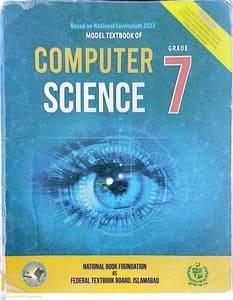
Comprehensive SLO-based solved exercises, MCQs, short & long questions, and Scratch programming guides for Grade 7 students following the latest NBF textbook.
This platform offers free, high-quality Class 7 Computer Science notes designed specifically for the Federal Board (FBISE). These notes follow the latest 2026-2027 National Book Foundation (NBF) curriculum, aligning with the Single National Curriculum (SNC). Students can access chapter-wise solved exercises, conceptual MCQs, programming walk-throughs, and PDF downloads to secure high marks in their school and board examinations.
Select any chapter to read online or download the PDF notes for exam preparation.
Master the essentials of Emerging Technologies (AI, VR, Biometrics), System Unit components (CPU, RAM, ROM, ports), and key peripherals of a computer system.
Learn word processing in MS Word, presentation design in PowerPoint, email composition and protocols (SMTP, POP3), Urdu typing, and authentication methods.
Explore the problem-solving process (analysis and solution development) and computational thinking solution elements like sequences, loops, conditions, and flowcharts.
Dive into decimal and binary number conversion, Scratch programming blocks, sprite control using control blocks, and creating basic games and countdown timers.
Understand computer ethics (online safety, digital piracy, plagiarism), cybercrime categories (hacking, identity theft, malware), Pakistan's cybercrime laws, and online activity impacts.
Explore entrepreneurship and innovation, the five stages of design thinking (Empathize, Define, Ideate, Prototype, Test), and sustainable development challenges.
In today's digital era, computer literacy has transitioned from an optional skill to a fundamental academic requirement. The Class 7 Computer Science course under the Federal Board (FBISE) is strategically designed to introduce students to critical computing paradigms. From basic hardware interfaces to the logic of programming languages, this curriculum ensures a robust foundation in digital literacy, preparing students for advanced secondary education.
Our notes are meticulously structured to bridge the gap between textbook theory and practical application. We break down the National Book Foundation (NBF) syllabus into digestible, student-friendly sections. Rather than encouraging rote memorization, these notes prioritize conceptual clarity, prompting students to understand how hardware components communicate and how code blocks control screen objects.
Whether you are trying to understand the difference between RAM and ROM, learn how to secure your email account, or write your first game script in Scratch, our notes provide clear, step-by-step guidance. With visual flowcharts, detailed comparisons, and exam-focused exercise questions, this is the ultimate study guide for Middle School computer education.
These notes serve as a comprehensive educational package tailored specifically for Federal Board Class 7 students. They translate the academic guidelines of the Single National Curriculum (SNC) into solved resources that students can easily access online or download in PDF format.
By using our notes, students can save valuable study time and gain direct insights into how questions are framed in FBISE class assessments and term exams. The content focuses heavily on Student Learning Outcomes (SLOs), ensuring that every learning objective mentioned in the curriculum is thoroughly addressed.
Specifically, our chapter-wise notes provide the following resources:
Students can use the chapter-wise material to access the following learning resources:
Complete step-by-step answers to all the questions in the NBF textbook chapters.
High-quality, SLO-based multiple-choice questions focusing on conceptual clarity.
Concise short answers explaining key terms, differences, and processes.
Detailed long-form answers structured with points and descriptive headings.
Simple and exact explanations of important technological and coding terminology.
Visual representations of system unit ports, flowcharts, and Scratch interfaces.
Conceptual application-based questions designed to evaluate critical thinking.
Print-ready PDF notes available for download to study offline anytime.
These Class 7 Computer Science notes are 100% aligned with the Single National Curriculum (SNC) guidelines approved by the Ministry of Federal Education and Professional Training. The content strictly adheres to the Student Learning Outcomes (SLO) assessment method introduced by the Federal Board (FBISE), ensuring that students are tested on conceptual understanding rather than simple cramming.
Follow this simple preparation method to get better results in Computer Science.
Begin by thoroughly reading the NBF textbook chapter to understand the basic theme, definitions, and main ideas.
Use our chapter summaries and definitions to reinforce the theoretical concepts and technological terms.
Test your understanding of the chapter topics by practicing our solved conceptual MCQs.
Memorize and practice the short questions to learn how to write precise, high-scoring answers in assessments.
Go through the detailed long-answer guides to learn how to structure complex topics using sub-headings and bullet points.
Draw flowcharts, trace binary conversions, and practice Scratch block assemblies to gain hands-on programming clarity.
Download our chapter-wise PDFs and use them for a quick, comprehensive review before your school term tests and exams.
Use these resources to complete your Computer Science preparation and other subjects.
Yes, these solved notes are fully updated for the 2026-2027 academic session according to the National Book Foundation (NBF) textbook prescribed by FBISE.
Yes, these notes are structured around the Student Learning Outcomes (SLO) framework, helping Grade 7 students solve conceptual programming, algorithm, and hardware-based exam questions.
These notes follow the official textbook published by the National Book Foundation (NBF) as prescribed by the Federal Board (FBISE) for Class 7.
Yes, complete solutions to all textbook exercise questions, including long answers, programming tasks, definitions, and short answers, are available on the chapter-specific pages.
Yes, chapter-wise PDF download links are provided on each chapter notes page, allowing you to study offline.
Yes, both the NBF textbook and our solved notes comply fully with the Single National Curriculum (SNC) guidelines approved by the government for Grade 7 Computer Science.
No, Class 7 is part of middle school education under the Federal Board. SSC refers to Class 9 and 10, while HSSC refers to Class 11 and 12.
While these notes specifically follow the NBF textbook for FBISE, the core computing concepts, Scratch programming, and algorithms are highly beneficial for Punjab Board students as well.
No, all study resources, programming guides, and solved exercises on StudyPlusPlus are 100% free to read online or download.
The notes break down complex topics like binary conversions, Scratch programming blocks, and cybercrime laws into simple, step-by-step explanations with visual illustrations and practical examples.
Yes, these notes contain detailed guides and visual explanations for Scratch programming blocks, game development, algorithms, and flowchart creation as required by the curriculum.
The notes cover all 6 chapters of the NBF textbook, from ICT Fundamentals to Entrepreneurship in the Digital Age.
Start by reading the textbook chapter, then use our solved exercises to verify your understanding. Practice Scratch coding, solve binary conversion questions, and attempt the MCQs and short questions sections.