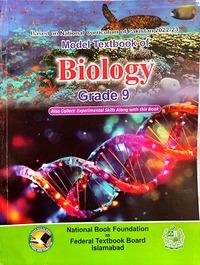
StudyPlusPlus offers FBISE Class 9 Biology (English Medium, NBF textbook) study material for the 2026-2027 session. It covers all 10 chapters, from The Science of Biology to Evolution. The page explains chapter-wise notes, solved exercises, straight and scenario-based MCQs, and short and long questions. These are organised around National Curriculum and SLO-based preparation for Federal Board annual examinations. You can read online or open the book PDF page.
Class 9 Biology Chapter Navigation Hub
Choose a chapter, then choose a resource. Need to understand the chapter first? Start with the notes. Ready for quick practice? Try the straight MCQs. Want application-based practice? Try the scenario MCQs.
Chapter 1
The Science of Biology
Explore the introduction to biology, its major fields, relationship with other sciences, and career opportunities. Understand the scientific method, hypothesis formulation, and biological study of malaria.
Study the definition and importance of biodiversity, historical and modern classification systems (Three Domains System), taxonomic hierarchy, binomial nomenclature, and viral classification complications.
Study cell structure and organelles, cell specialization, division of labour, and stem cells. Learn structural differences between plant and animal cells through practical activities.
Understand the cell cycle phases, the mechanism and significance of mitosis and meiosis, spindle apparatus formation, and how genetic variations are maintained in sexual reproduction.
Study the levels of biological organization, homeostatic mechanisms such as temperature regulation, and the structure, function, and physiological relation of plant tissues.
Learn biochemistry basics, biological molecules (proteins, lipids, carbohydrates, nucleic acids), DNA structure and function as a hereditary carrier, RNA types, and the flow of genetic information.
Understand metabolic pathways, enzyme characteristics, mechanisms and kinetics of enzyme action, the role of ATP, and the biochemical mechanisms of photosynthesis and respiration.
Study plant nutrition, transport mechanisms (ascent of sap, transpiration, translocation), gas exchange patterns, respiratory patterns, and osmotic adjustments (osmoregulation) in plants.
Explore asexual and sexual reproduction modes in plants, including natural and artificial vegetative propagation, flower structure, pollination, fertilization, and seed germination.
Examine the principles of variation and evolution, Darwin's theory of natural selection, speciation, and evolutionary evidence from paleontology, comparative anatomy, and selective breeding.
Class 9 Biology under the Federal Board (FBISE) introduces students to the study of life, from the scientific method and the classification of living organisms to the cell, biological molecules, enzymes, plant physiology and evolution. The course follows the National Curriculum and the National Book Foundation (NBF) textbook, so the ten chapters build step by step. Chapter 1 explains what biology is, its major fields and how scientists use the biological method, with malaria as a worked example. Biodiversity, the cell, the cell cycle, tissues and organ systems, molecular biology, metabolism, plant physiology, plant reproduction and evolution follow. Many Class 10 and later topics, including genetics, respiration and photosynthesis, depend on this foundation, so a clear understanding now makes later classes easier.
Different question types train different skills. Multiple-choice questions build speed and accuracy on definitions, functions and facts. Scenario-based MCQs go a step further: they give a short situation or data and ask you to apply a concept, which suits topics like homeostasis, enzyme activity, transpiration or natural selection. Short questions teach you to answer in a few precise sentences, which matters for topics such as the functions of proteins and lipids, the types of RNA, or the importance of mitosis. Long questions require structured, detailed answers with labelled diagrams and clear points, for example the structure of a cell, the mechanism of enzyme action, the pressure flow theory or sexual reproduction in flowering plants. Practising all of these formats prepares you for objective and subjective papers alike.
SLO-based preparation means studying according to the Student Learning Outcomes in the curriculum. Instead of memorising random pages, you ask what the curriculum expects you to know, explain, compare or apply for each topic, then check yourself against that list. This keeps revision focused and reduces wasted effort. For annual examinations, work through the chapters in order, revise each one soon after finishing it, then practise MCQs and scenario-based questions. Write short and long answers by hand, and practise diagrams until you can label them without looking. In the final weeks, revise definitions, key processes and diagrams chapter by chapter, take timed practice tests, and review mistakes. For the exact paper pattern and marks distribution, always refer to the latest official FBISE assessment scheme.
Paper Pattern
Please note: No FBISE marks, question counts or assessment-scheme data were supplied for this page, so none are stated here. Check the latest official FBISE scheme of studies and past papers for the exact numbers.
Components students should expect to prepare for in Biology:
Straight MCQs: Direct multiple-choice questions on definitions, facts, structures and functions from the textbook.
Scenario/Stimulus MCQs: MCQs built on a short situation, passage or data, where you apply a concept instead of recalling it.
SRQs (Short Response Questions): Questions answered in a few precise sentences, such as definitions, differences, functions and short explanations.
ERQs (Extended Response Questions): Detailed questions that need structured answers, labelled diagrams and a full explanation of a process or concept.
What Is Included?
✓
Solved Exercises
Every single question from the National Book Foundation (NBF) textbook exercises is fully solved with clear, scientific explanations.
A
MCQs
Multiple-choice questions with explained answers to help students secure full marks in the objective section of the exam paper.
Q
Short Questions
Short questions focused on the direct application of biological concepts, processes, and structures.
L
Long Questions
Detailed answers for complex biological processes, experimental setups, and extensive subject topics.
D
Definitions
Precise, board-standard definitions of biological terms, principles, and phenomena with examples.
◎
Diagrams
Clear, labeled diagrams for cell structures, physiological processes, and reproductive systems to practice for exams.
★
SLO-based Questions
Conceptual problems and unseen application questions (Stimulus/Scenario-based MCQs, Short & Long questions) designed specifically for the Federal Board SLO model.
↓
PDF Download
Direct links to download chapter-wise notes, Straight MCQs, Scenario MCQs, for offline reading and convenient revision before exams.
SNC and National Curriculum Alignment
These 9th Class Biology Notes are fully aligned with the Single National Curriculum (SNC) guidelines of Pakistan and the Student Learning Outcomes (SLO) model of the Federal Board (FBISE). The syllabus focuses on conceptual depth, biological reasoning, and practical experimentation, preparing students for higher studies in medical and biotechnology fields. Our notes support this educational reform by emphasizing core concepts and logical proofs rather than rote learning.
How to Prepare Class 9 Biology from These Notes
Follow this simple preparation method to get better results in Biology.
1
Chapter revision
Finish one chapter at a time. Revise it within 2-3 days, then again weekly using definitions, diagrams and key processes.
2
MCQ practice
Solve straight MCQs after each chapter and note the concepts you got wrong.
3
Scenario MCQs
Read the situation carefully, find the biological concept involved, then eliminate wrong options.
4
Short questions
Learn precise definitions, differences and functions, and practise answering in two to four clear sentences.
5
Long questions
Practise labelled diagrams and step-by-step answers, especially for mitosis, meiosis, enzymes, transport in plants and plant reproduction.
6
Exam-time revision
Use the last weeks for timed practice, quick revision of key terms and diagrams, and review of past mistakes.
Related Resources
Use these resources to complete your Biology preparation and other subjects.
What are included in FBISE Class 9 Biology notes on StudyPlusPlus?
The page covers chapter-wise notes, solved exercises, straight and scenario-based MCQs, short and long questions, definitions, key concepts and diagrams for the NBF Class 9 Biology course.
Are these notes chapter-wise?
Yes. The material is organised by the 10 chapters of the Class 9 Biology course, from The Science of Biology to Evolution.
Are MCQs available for Class 9 Biology?
Yes. Both straight MCQs and scenario-based MCQs are part of the preparation material described on this page.
What is the FBISE paper pattern for Class 9 Biology?
The components to prepare for are straight MCQs, scenario/stimulus MCQs, SRQs and ERQs. Exact marks and question counts are not stated here, so please refer to the official FBISE assessment scheme.
How many MCQs are included in the FBISE Biology paper?
There are 60 MCQs included in the FBISE Biology paper.
How many marks are allocated to the objective portion?
There are total 60 MCQs included in the paper, and each question have 0.5 marks.
How should students prepare for FBISE objective papers?
Revise each chapter's definitions and concepts, practise straight MCQs after every chapter, then work on scenario-based MCQs by identifying the concept being tested. Review your mistakes regularly.
Is this aligned with the latest FBISE syllabus?
The page is prepared for the 2026-2027 session and follows the Federal Board Class 9 Biology course based on the National Curriculum and the NBF textbook. Always confirm any syllabus change with official FBISE notices.
Disclaimer: This content is for educational purposes only. MaryamNotes.pk is an independent educational website and is not the Federal Board or the publisher of the prescribed textbook. Copyright belongs to the respective owners where applicable. Practice questions are independently prepared and are not official FBISE examination questions. The resources do not guarantee examination appearance or marks.