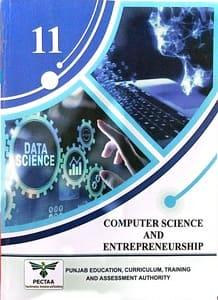
Class 11 Computer Science Notes Punjab Board 2026-2027
Prepare 1st year Computer Science with chapter-wise Punjab Board notes, solved textbook exercises, SLO-based MCQs, conceptual short questions, extensive long questions, Python programming tutorials, and PDF revision support.
PCTB / PECTAA syllabus-alignedSLO-based notesChapter-wise preparationSolved exercisesMCQs and board questionsPDF download and online reading
Quick Answer
This page provides Class 11 Computer Science notes for Punjab Board students in English medium. The notes are comprehensive, SLO-based, and strictly aligned with the Punjab Curriculum and Textbook Board (PCTB) and PECTAA curriculum for the 2026-2027 academic session. Students can master chapter-wise concepts, solved textbook exercises, Python programming practicals, algorithmic problem-solving, and objective MCQs with free online reading and PDF download options.
Chapter-Wise Computer Science Notes
Select any chapter to read online or review key concepts, solved exercises, programming questions, and board exam notes.
Chapter 1
Introduction to Software Development
Understand the software development lifecycle (SDLC), Waterfall and Agile methodologies, project planning, UML modeling diagrams, design patterns, testing strategies, and modern development environments.
Explore computational problem classification, generate-and-test approaches, solvability, Big O time and space complexity, divide and conquer, greedy methods, dynamic programming, and sorting/searching algorithms.
Master primitive and non-primitive data structures including lists, stacks, queues, trees, and graphs along with their core operations, properties, memory representations, and practical computing applications.
Study fundamental statistical metrics, data collection techniques, data cleaning and preparation, regression and clustering models, model performance evaluation, and visual storytelling with charts.
Analyze software terms of use, cybersecurity threats like phishing and spyware, prevention strategies, digital divide impacts and remedies, societal computing effects, and digital citizenship ethics.
Develop effective online research competencies, digital library navigation, critical information assessment, academic research ethics, copyright protection, and intellectual property management.
Discover design thinking methodologies, modern business plan formulation, market research techniques, investor pitching strategies, marketing frameworks, digital financial concepts, and creative innovation.
What Is Included in Class 11 Computer Science Notes?
These Punjab Board Class 11 Computer Science notes are crafted to ensure thorough conceptual clarity, programming expertise, and top marks in board examinations.
✓
Solved Textbook Exercises
Comprehensive chapter-wise solved textbook exercises helping students master conceptual questions, algorithm traces, and textbook questions.
A
SLO-Based MCQs
Conceptual and topic-wise multiple choice questions with answers covering theoretical knowledge, Python output prediction, and code analysis.
Q
Short Questions
Extensive collection of conceptual, knowledge-based, and analytical reasoning short questions with accurate, scoring answers.
L
Long Questions
Well-structured comprehensive long answers written with formal headings, architectural diagrams, algorithms, and code examples.
D
Important Definitions
Exact computer science definitions, technical terminologies, and programming keywords highlighted for quick memorization and revision.
◎
Diagrams and Flowcharts
Neat UML diagrams, data structure illustrations, system architectures, and flowchart diagrams with clear labels and explanations.
★
Board Exam Preparation
Curated questions and high-yield topics reflecting past Punjab Board examination patterns and modern SLO assessment trends.
↓
PDF Download / Online Reading
Convenient online viewing and downloadable PDF options for uninterrupted learning and flexible revision anywhere.
Useful for All Punjab Boards
These Class 11 Computer Science notes follow the Punjab Curriculum and Textbook Board (PCTB) and are fully applicable to all intermediate education boards across Punjab:
The Class 11 Computer Science notes on StudyPlusPlus strictly adhere to the Punjab Board textbook pattern and are fully aligned with the Punjab Curriculum and Textbook Board (PCTB) and Punjab Education Curriculum Training and Assessment Authority (PECTAA) syllabus updates for the 2026-2027 academic session. All chapters, programming constructs, and assessment styles are designed for educational guidance. StudyPlusPlus is an independent learning platform and does not claim official affiliation with PCTB or PECTAA.
Step-by-Step Class 11 Computer Science Exam Preparation Guide
Follow this systematic study plan to master 1st year Computer Science concepts, Python coding, data structures, and theory for board exams.
1
Read the textbook chapter thoroughly
Start by reading the official Punjab Board textbook chapter to build solid theoretical foundations and understand computing concepts.
2
Revise key concepts and definitions
Review bullet points, essential computing terminology, programming syntax rules, and algorithmic steps using chapter notes summaries.
3
Solve chapter-wise MCQs
Test your conceptual understanding by solving objective questions and reviewing underlying reasons and code outputs for correct choices.
4
Prepare conceptual short questions
Practice answering short reasoning and programming questions succinctly with clear syntax and standard technical terminology.
5
Prepare structured long questions
Write comprehensive answers using structured outlines, headings, pseudocode, architecture models, and Python code snippets.
6
Practice diagrams and flowcharts
Draw and label UML class diagrams, sequence flows, stack/queue representations, and tree structures to secure full presentation marks.
7
Revise before tests and board exams
Use the quick PDF notes for rapid final revision before college monthly tests, send-up exams, and annual board examinations.
Related Resources
Explore additional textbooks and study resources to support your 11th class preparation.
Are these Class 11 Computer Science notes for Punjab Board?
Yes, these notes are tailored specifically for Punjab Board Class 11 Computer Science students, catering to Lahore Board, Rawalpindi Board, Gujranwala Board, Faisalabad Board, Multan Board, Sargodha Board, Bahawalpur Board, DG Khan Board, and Sahiwal Board.
Are these notes PCTB / PECTAA syllabus-aligned?
Yes, the notes follow the official Punjab Board textbook pattern and are aligned with the latest PCTB / PECTAA curriculum for the 2026-2027 academic session.
Can students download Class 11 Computer Science notes in PDF?
Yes, students can download chapter-wise PDF notes for offline learning as well as read them directly online on StudyPlusPlus.
Are MCQs included in these Computer Science notes?
Yes, comprehensive SLO-based multiple choice questions (MCQs) are included with correct answers for thorough objective paper preparation.
Are solved exercises included?
Yes, complete solved textbook exercises covering short answers, programming queries, data structures, and descriptive questions are included for all 9 chapters.
Are these notes useful for Lahore Board and Rawalpindi Board?
Yes, all intermediate boards in Punjab follow the identical PCTB syllabus, making these notes equally effective for Lahore Board, Rawalpindi Board, and all other regional boards.
Are these Class 11 Computer Science notes free?
Yes, StudyPlusPlus offers these educational notes completely free of charge for students and teachers across Pakistan.
How should students prepare from these notes?
Students should read the textbook chapter first, review core definitions and programming syntax, practice MCQs, prepare short and long answers, and conduct periodic revisions using PDF notes.
Are these notes designed according to the SLO pattern?
Yes, these notes incorporate Student Learning Outcomes (SLO-based) conceptual questioning, analytical problem-solving, and standard board assessment criteria.
Is the Class 11 Computer Science textbook PDF available in English medium?
Yes, the Class 11 Computer Science English medium textbook PDF is available on StudyPlusPlus at /punjab-board/books/11/computer-science.
Educational Notice: This content is provided for educational support only. It is not for sale, redistribution, or commercial use. StudyPlusPlus is not claiming official ownership of any government textbook material.