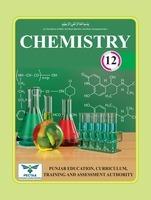
12th Class Chemistry Book PDF Download Punjab Board
The 12th Class Chemistry Book PDF for Punjab Board is designed for Intermediate Part 2 (2nd Year) students studying Chemistry in English medium. This textbook follows the latest Punjab Board / PECTAA curriculum and is useful for students of all Punjab boards, including Lahore, Gujranwala, Faisalabad, Multan, Rawalpindi, Sargodha, Bahawalpur, Sahiwal, and DG Khan boards. Students can read the Chemistry textbook online or download the PDF for offline study.
🌿 Subject: Chemistry· English·🎓 Class: 12 / Intermediate Part 2 / HSSC Part 2·🏫 Board: Punjab Board·📅 Session: 2026-2027·🏛 Publisher: Punjab Curriculum and Textbook Board / Punjab Board curriculum authority·📄 Format: PDF
Advertisement
🧪
Class 12 Chemistry — Punjab Board (PCTB)
Session 2026-2027 · HSSC Part 2 · Free PDF
⬇ Download PDF
Overview
About the Punjab Board Chemistry Book
The Class 12 Chemistry textbook introduces students to essential topics in modern chemistry. The curriculum covers inorganic chemistry aspects such as Group 2 elements and transition metals, followed by a detailed progression into organic chemistry, including aromatic hydrocarbons, halogenoalkanes, hydroxy compounds, carbonyl compounds, carboxylic acids, organic nitrogen compounds, and organic synthesis. It also details macromolecules, polymers, biochemistry, analytical chemistry methods like chromatography and spectroscopy (including NMR), and applications of chemistry in energy, medicine, agriculture, industry, and water safety.
This textbook is written in a clear, accessible manner suitable for classroom learning and self-paced study. Intermediate science students preparing for their final board examinations or looking for PECTAA Chemistry Book, PCTB Chemistry Book, PTB Chemistry Book, or Punjab Textbook Board book will find this updated resource aligned with their academic needs.
Punjab Board / PECTAA Curriculum Reforms
Under the new educational reforms, Punjab Board textbooks are associated with the PECTAA curriculum framework. However, because many students still search using traditional terms like PCTB, PTB, and Punjab Textbook Board, this guide naturally incorporates these variations to help students easily find the updated 2026-2027 edition.
The curriculum emphasizes building a conceptual foundation rather than relying on rote learning. This approach helps students perform well in class, pass intermediate board examinations with high marks, and prepare for advanced educational pathways.
Essential Foundation for MDCAT and ECAT Preparation
Class 12 Chemistry is a major subject for FSc Pre-Medical and Pre-Engineering students. A thorough understanding of organic reaction mechanisms, functional groups, polymer chemistry, and modern spectroscopy is critical for obtaining high marks in intermediate board exams and forms the baseline of the MDCAT and ECAT entry test syllabi.
Students are encouraged to focus on chemical structures, reaction equations, and analytical procedures. Working through the review exercises and conceptual questions provided in the textbook is highly recommended to improve retention and exam performance.
Who should use this book
This Chemistry textbook is useful for:
12th class Punjab Board students
Class 12 / HSSC Part 2 / 2nd Year science students
English medium students
Teachers preparing classroom lessons
Self-study students
Tuition academies
Students revising for board exams
Learners preparing Chemistry concepts for MDCAT, ECAT, and future engineering/medical studies
Chapters Included in 12th Class Chemistry Book Punjab Board
The following chapters are included in the official PCTB Class 12 Chemistry textbook for 2026-2027:
1Group 2 Elements
2Transition Metals
3Basics of Organic Chemistry
4Aromatic Hydrocarbons
5HalogenoAlkanes
6Hydroxy Compounds
7Carbonyl Compounds And Carboxylic Acids
8Organic Nitrogen Compounds
9Organic Synthesis
10Polymers
11Biochemistry
12Chromatography
13Spectroscopy-1
14Spectroscopy-2 NMR
15Materials and Energy
16Medicine, Agriculture and Industry
17Water
* Chapter numbers follow the standard PCTB Class 12 Chemistry curriculum (continuation from Class 11).
How to Use This Book
Accessing the Punjab Board Class 12 Chemistry book on this page is quick and simple:
View Online — Use the embedded PDF viewer above to read any chapter directly in your browser. No download is needed.
Download PDF — Click the Download PDF button in the bar above the viewer to save the complete book on your device for offline study.
Share Freely — Share this page with classmates, students, or teachers who need the book. It is always free and accessible.
This resource is provided for free educational use only. It is not intended for commercial reproduction, resale, or redistribution.
Download Book PDF
Download Class 12 Chemistry Book in PDF format for offline study, revision and exam preparation.
Disclaimer: This website does not write, publish, sell, or own the Class 12 Chemistry textbook. The book is an official publication of the Punjab Curriculum and Textbook Board (PCTB), shared here strictly for free educational and reference use by students and teachers. All intellectual property rights belong to PCTB and the Government of Punjab, Pakistan.
Advertisement
Frequently Asked Questions
You can download or read online the 12th Class Chemistry Book PDF for Punjab Board from StudyPlusPlus.
Yes, this page is created for the 2026-2027 edition of the Class 12 Chemistry book according to the latest Punjab Board / PECTAA syllabus.
Yes, this Chemistry textbook is for Class 12 English medium students studying under Punjab Board.
Yes, the book follows the Punjab Board / PECTAA curriculum and syllabus used for the 2026-2027 academic session.
Many students still search for the book as PCTB Chemistry Book, PTB Chemistry Book, or Punjab Textbook Board book. This page is for the Punjab Board Class 12 Chemistry textbook PDF aligned with the current curriculum.
Yes, students can read the 12th Class Chemistry Book online on StudyPlusPlus without needing to download it first.
Yes, this book is extremely useful for building Chemistry concepts required for MDCAT and ECAT preparation. Topics like organic synthesis, spectroscopy, and transition elements form the core of entry test syllabi.
This Chemistry book is useful for students of all Punjab boards, including Lahore, Gujranwala, Faisalabad, Multan, Rawalpindi, Sargodha, Bahawalpur, Sahiwal, and DG Khan boards.
The book follows the latest Punjab Board / PECTAA syllabus. Where applicable, Punjab curriculum updates may reflect broader curriculum reforms, including SNC or Single National Curriculum alignment.
The new Class 12 Chemistry textbook covers key areas including Group 2 elements, transition metals, basics of organic chemistry, hydrocarbons, spectroscopy (NMR), chromatography, polymers, biochemistry, and water.