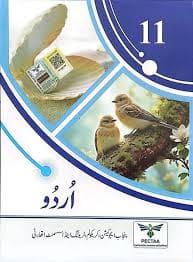
Prepare 1st year Urdu with chapter-wise Punjab Board notes, fully solved textbook exercises, SLO-based MCQs, conceptual short questions, Sabaq Khulasa, verse Tashreeh for Nazm and Ghazal, and free PDF download support.
PCTB / PECTAA syllabus-alignedSLO-based notesChapter-wise preparationSolved exercisesMCQs and board questionsPDF download and online reading
Quick Answer
This page provides Class 11 Urdu notes for Punjab Board students following the latest curriculum. The resources are comprehensive, SLO-based, and strictly aligned with the Punjab Curriculum and Textbook Board (PCTB) and PECTAA curriculum for the 2026-2027 academic session. Students can master all 12 prose chapters, 5 nazmain, and 5 ghazals with step-by-step solved textbook exercises, stanza-by-stanza Tashreeh, Sabaq Khulasa, conceptual MCQs, short questions, and in-depth board exam preparation material with free online reading and downloadable PDF options.
Chapter-Wise Urdu Notes
Select any chapter, poem (nazm), or ghazal to read online or review solved exercises, Tashreeh, Sabaq Khulasa, and board exam notes.
Chapter 1
حَمْد (شاعر: حفیظ تائب)
A devotional Hamd by Hafeez Taib glorifying the unity, majestic power, and divine blessings of Allah Almighty. Includes verse-by-verse Tashreeh, central idea, solved exercise questions, vocabulary meanings, and SLO-based MCQs.
A revered Naat by Syed Nafees-ul-Husseini paying heartfelt tribute to the Holy Prophet Hazrat Muhammad ﷺ. Features comprehensive stanza Tashreeh, literary aesthetics, solved textbook questions, and objective MCQs.
Allama Shibli Nomani highlights the exalted moral conduct, benevolence, humility, and justice of the Holy Prophet ﷺ with historical evidence. Provides detailed paragraph explanations, Sabaq Khulasa, textbook question answers, and MCQs.
Khwaja Hasan Nizami portrays the pathos, faith, and resilient dignity of the Mughal royal family during the 1857 turmoil. Covers Siaq-o-Sabaq context, chapter summary, solved exercise short and long questions, and board MCQs.
Ashfaq Ahmed narrates a poignant courtroom encounter emphasizing the dignity, sacred social status, and societal respect owed to teachers. Features comprehensive lesson summary, thematic analysis, solved textbook exercises, and MCQs.
A witty and humorous satirical essay by Rasheed Ahmad Siddiqui illustrating the cultural significance, domestic utility, and symbolic social role of the charpoy in traditional Subcontinental life. Includes summary and exercise solutions.
Khadija Mastoor reflects on the emotional turmoil, historic struggles, mass migrations, and monumental sacrifices during the creation of Pakistan. Offers Sabaq Khulasa, Siaq-o-Sabaq references, and solved questions.
Saadat Hasan Manto's renowned short story featuring Ustad Mangu, capturing political illusions, colonial disillusionment, and social awakening around the Government of India Act 1935. Includes character sketches and exercise notes.
Amjad Islam Amjad's reflective narrative exploring generational change, familial bonds, personal transitions, and cultural heritage across changing eras. Includes complete lesson summary, textbook question answers, and MCQs.
پاکستانی زبانیں اور اُن کا باہمی رشتہ (مصنف: ڈاکٹر ممتاز منگلوری)
Dr. Mumtaz Manglori analyzes the common roots, shared linguistic vocabulary, scripts, and cultural solidarity uniting Pakistan's regional languages with Urdu. Includes comprehensive summary, textbook solutions, and MCQs.
Allama Muhammad Iqbal captures the picturesque natural splendor of the Lolab Valley in Kashmir alongside deep philosophical themes of spiritual awakening and yearning for freedom. Covers stanza-by-stanza Tashreeh, central theme, and questions.
Akhtar Sheerani's lyrical poem filled with nostalgic longing, romantic imagery, and affectionate inquiries directed at an arriving traveler from the homeland. Features full verse Tashreeh, exercise solutions, and objective MCQs.
Ehsan Danish portrays the inspiring essence, dignity of labor, and supreme value of freedom for the common man against tyranny. Provides stanza Tashreeh, central idea (Markazi Khayal), and solved textbook questions.
اخلاص (شاعر: رحمان بابا - مترجم: پروفیسر محمد طٰہٰ خان)
A mystic Pashto poem by Sufi poet Rahman Baba, translated into poetic Urdu by Prof. Muhammad Taha Khan, highlighting divine sincerity, spiritual purity, and selfless virtue. Includes verse explanations and solved exercises.
Syed Muhammad Jafri presents an entertaining humorous and satirical poem poking fun at modern buffets, westernized social gatherings, and banquet chaos. Features verse Tashreeh, humor analysis, textbook questions, and MCQs.
پتّا پتّا بُوٹا بُوٹا، ہمارا حال جانے ہے (شاعر: میر تقی میر)
Mir Taqi Mir's timeless classical ghazal filled with pathos, tender lyrical imagery, and sincere expressions of devotion and heartbreak. Includes comprehensive Sher-by-Sher Tashreeh, technical prosody, exercise answers, and MCQs.
Ahmad Faraz's celebrated romantic ghazal capturing the sorrow of separation, departed companionship, and poignant dignity in heartache. Features exhaustive Sher Tashreeh, contextual meanings, and textbook solutions.
These Punjab Board Class 11 Urdu notes are crafted to ensure complete exam preparation, literary mastery, and top board exam scores across all sections.
📝
Solved Textbook Exercises
Complete chapter-wise solved textbook exercises with comprehensive answers, vocabulary meanings (Farhang), and grammar explanations.
Comprehensive collection of conceptual, text-based, and analytical short questions tailored to Punjab Board marking schemes.
📖
Long Questions & Sabaq Khulasa
In-depth long questions, comprehensive chapter summaries (Sabaq Khulasa), and detailed Siaq-o-Sabaq paragraph explanations.
💡
Verse-by-Verse Tashreeh
Complete stanza and couplet explanations (Tashreeh) for all 5 nazmain and 5 ghazals with poetic context, central idea, and keywords.
📊
Urdu Grammar & Composition
Structured guidance on essay writing (Mazmoon Nigari), application writing, letter writing, dialogue, and critical appreciation.
🏆
Board Exam Preparation
Exam-oriented question selection, past paper question alignments, and SLO-based analytical test items for all Punjab boards.
📥
PDF Download / Online Reading
Smooth online reading interface and offline downloadable PDF notes for uninterrupted study on mobile, tablet, or desktop.
Useful for All Punjab Boards
These Class 11 Urdu notes follow the Punjab Curriculum and Textbook Board (PCTB) and are fully applicable to all intermediate education boards across Punjab:
The Class 11 Urdu notes on StudyPlusPlus strictly adhere to the Punjab Board textbook pattern and are fully aligned with the Punjab Curriculum and Textbook Board (PCTB) and Punjab Education Curriculum Training and Assessment Authority (PECTAA) syllabus updates for the 2026-2027 academic session. All prose lessons, poems, ghazals, solved exercises, summaries, and assessment questions are designed for educational guidance. StudyPlusPlus is an independent learning platform and does not claim official affiliation with PCTB or PECTAA.
Step-by-Step Class 11 Urdu Exam Preparation Guide
Follow this systematic study plan to master 1st year Urdu literature, poetry explanation, grammar, and board exam paper presentation.
1
Read the textbook chapter thoroughly
Begin by reading each prose chapter, nazm, or ghazal directly from the Punjab Board Urdu textbook to understand themes, vocabulary, and storyline.
2
Master word meanings and Farhang
Review difficult vocabulary words and phrases to enrich your literary expression and strengthen paragraph reading comprehension.
3
Prepare Sabaq Khulasa and Siaq-o-Sabaq
Practice writing chapter summaries (Khulasa) in clear, concise Urdu and master Siaq-o-Sabaq paragraph context identification.
4
Learn stanza-by-stanza Tashreeh
Study the detailed Tashreeh of all nazmain and ghazals couplets, noting the poet's style, imagery, and central philosophical thought.
5
Solve textbook exercises and short questions
Write down answers to all exercise questions to refine handwriting speed, sentence structure, and board-standard formatting.
6
Practice objective MCQs and Urdu grammar
Test your preparation with SLO-based multiple choice questions, author bios, idioms, and grammatical rules frequently tested in intermediate exams.
7
Revise before tests and board exams
Use the quick PDF summary sheets for efficient formula, Khulasa, and Tashreeh recap before college tests, send-ups, and annual Punjab Board examinations.
Related Resources
Explore additional textbooks and study notes to support your 11th class preparation.
Yes, these notes are tailored specifically for Punjab Board Class 11 Urdu students, catering to Lahore Board, Rawalpindi Board, Gujranwala Board, Faisalabad Board, Multan Board, Sargodha Board, Bahawalpur Board, DG Khan Board, and Sahiwal Board.
Are these notes PCTB / PECTAA syllabus-aligned?
Yes, the notes follow the official Punjab Board textbook pattern and are aligned with the latest PCTB / PECTAA curriculum for the 2026-2027 academic session.
Can students download Class 11 Urdu notes in PDF?
Yes, students can download chapter-wise PDF notes for offline study as well as view them directly online on StudyPlusPlus.
Are MCQs included in these Urdu notes?
Yes, comprehensive SLO-based multiple choice questions (MCQs) are included with correct answers covering prose chapters, poetry, ghazals, and Urdu grammar for thorough objective paper preparation.
Are solved exercises included?
Yes, complete solved textbook exercises covering short questions, long questions, Sabaq Khulasa, Siaq-o-Sabaq explanations, and verse Tashreeh are included for all chapters.
Are these notes useful for Lahore Board and Rawalpindi Board?
Yes, all intermediate boards across Punjab follow the identical PCTB syllabus, making these notes equally effective for Lahore Board, Rawalpindi Board, and all other regional boards.
Are these Class 11 Urdu notes free?
Yes, StudyPlusPlus offers these educational notes and study resources completely free of charge for students and teachers across Pakistan.
How should students prepare from these notes?
Students should read the textbook lessons, understand word meanings, practice writing Sabaq Khulasa, learn stanza-by-stanza Tashreeh, solve exercise short questions, practice objective MCQs, and conduct regular revisions.
Are these notes designed according to the SLO pattern?
Yes, these notes incorporate Student Learning Outcomes (SLO-based) conceptual questioning, critical literary analysis, and standard board assessment criteria.
Is the Class 11 Urdu textbook PDF available?
Yes, the official Class 11 Urdu textbook PDF is available to view and download on StudyPlusPlus at /punjab-board/books/11/urdu.
Educational Notice: This content is provided for educational support only. It is not for sale, redistribution, or commercial use. StudyPlusPlus is not claiming official ownership of any government textbook material.